Hospitality Financial Leadership
Build managers who can explain the business.
Operator-led financial training for restaurant and hotel F&B leaders who are responsible for labor, cost, budgets, forecasts, and P&L conversations — but were never given practical financial training.
The Management Gap
Strong operators are often given financial responsibility before financial training.
Hospitality managers are promoted because they can lead teams, serve guests, and run operations. Then they are expected to read a P&L, manage labor and cost of goods, explain variances, and participate confidently in financial reviews.
Knowing that a percentage is high is not the same as understanding why it moved, how many dollars matter, or what management should do next.
The goal is not to turn hospitality managers into accountants. It is to make them better operators because they understand the financial consequences of their decisions.
The Financial Leadership Framework
Four questions managers should be able to answer every time.
What happened?
What changed versus plan, forecast, prior period, or operating expectation?
Why?
What operating decisions or business conditions actually caused the result?
How much did it matter?
Translate the variance into meaningful dollar impact — not only percentage points.
What are we doing about it?
Connect the financial story to a specific operating action and expected outcome.
The Flagship Engagement
Two sessions. Applied between them.
Designed for one company cohort so managers learn a common financial language and apply it to the way the organization actually operates.
Session 1
Understand the Numbers
Navigate the F&B P&L, understand revenue, cost of goods, labor and prime cost, and separate percentage movement from real financial impact.
Between Sessions
Apply It
Each manager completes a short financial diagnosis: What happened → Why → Dollar impact → Recommended action.
Session 2
Diagnose & Communicate
Connect variances to operating causes, prioritize what matters, develop practical actions, and communicate performance clearly in a business review.
Financial Scale
Small percentage movements can represent very large operating dollars.
That is why the program teaches managers to move beyond “the percentage is high” and quantify what a variance actually means to the business.
Illustrative Example
For a hospitality company with $30 million in annual F&B revenue, half a point of prime-cost movement equals $150,000.
The program is designed to help managers understand, diagnose, communicate, and act on variances of that scale.
Illustrative arithmetic only. This is not a promised savings or performance outcome.
Standard Company Cohort
Financial Leadership Program
For restaurant groups, hotel companies, ownership groups, and hospitality organizations that want managers who can do more than report whether a number is red or green.
Standard engagements begin at
Additional participants, significant customization, and travel outside the New York City market are scoped separately.
Discuss Your TeamDownload Program OverviewFree Tool
Beverage Cost Variance Calculator
Turn a beverage-cost percentage into the dollar gap worth investigating.
This is the translation managers learn to make across the P&L: percentage movement → dollar impact → operating action.
Hospitality Profit Tools
Beverage Cost Variance Calculator
Your Variance
Enter your numbers and calculate your beverage-cost variance.
Theoretical cost is optional. The annualized figure assumes the selected period is representative and the variance repeats at the same rate. A gap is an investigation trigger, not proof of a specific cause.
Built by an Operator, for Operators
Financial training grounded in real hospitality operations.
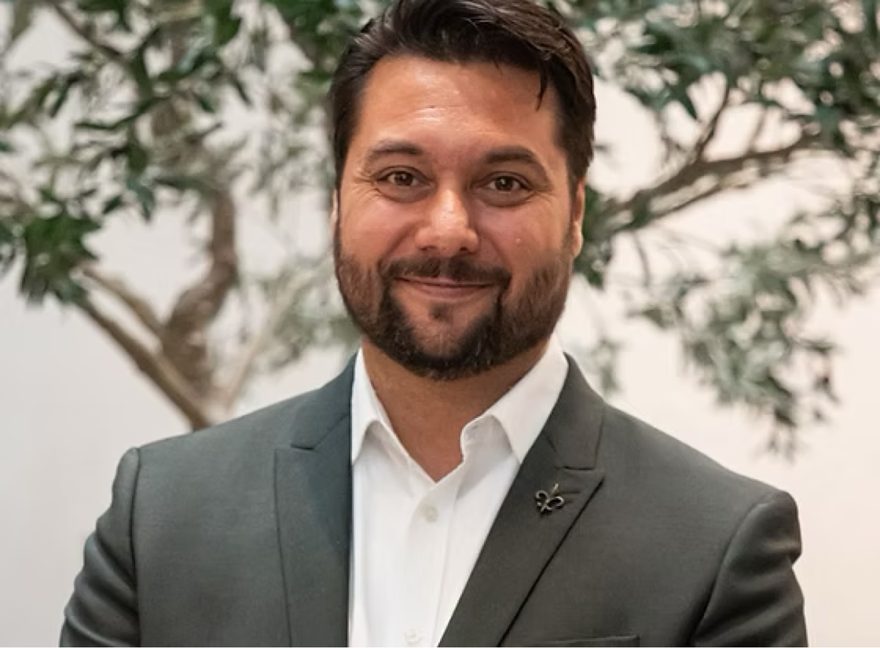
Paul Blackwell has more than 15 years of restaurant, bar, and hotel F&B leadership experience in New York City. He currently serves as Director of Operations for Concrete Hospitality Group and has leadership experience across Marriott and Hyatt organizations.
He has managed the same labor, cost, pricing, profitability, and P&L conversations this program teaches managers to handle.
Buyer Questions
What companies usually want to know before a conversation.
Can the program use our P&L format and terminology?
Where appropriate, the standard program can align exercises to your P&L structure and operating language. Significant customization or company-specific curriculum development is scoped separately.
What if some managers already have stronger financial skills?
The program is designed around application, diagnosis, dollar impact, and communication—not basic accounting definitions alone. Pre-program assessment helps establish the cohort’s starting point.
Is the program onsite or virtual?
Both are available. The standard engagement is two live half-day sessions. Travel outside the New York City market is scoped separately.
Who should attend?
General Managers, Assistant General Managers, F&B Directors, Restaurant Managers, Bar Managers, Beverage Directors, chefs, and other hospitality leaders responsible for financial results.
Company Training
Build managers who can explain the business.
If financial capability is a development gap on your team, the next step is a short buyer conversation about the managers, the current pain points, and what a useful engagement would need to accomplish.
Start with a buyer conversation.
For now, the most direct contact route is Paul’s verified LinkedIn profile. A dedicated Blackwell Hospitality email and booking flow can be added when the domain is connected.